Tori is a Maltipoo. For a while, she had a few things going on that I chalked up to just being part of who she is. Tear stains under her eyes. Reddish fur around the area where she peed. Red, irritated patches on her legs where she'd lick. I'd noticed all of it, but I'd accepted it. It seemed like a lot of small white dogs just had these things.
I didn't expect changing her food to do anything dramatic. And I especially didn't expect to have proof that it did.
 Before the diet change — Tori with noticeable tear staining and reddish discoloration.
What Changed in Her Diet
Tori had been eating freeze-dried dog food — which is a decent option — but after reading 愛犬のための症狀.目的別榮養事典 (a Japanese book on dog nutrition), I started understanding how directly food affects a dog's health. That pushed me to get more intentional.
I started making a homemade topper to mix into her regular meals. The recipe is simple: beef shank, broccoli, carrot, celery, ground beef, and duck leg, slow cooked in water until everything breaks down into a rich broth. The kind where even the liquid is full of nutrients. I portion it out and add a spoonful to her bowl each meal.
I also got stricter about her treats. I switched to single-ingredient treats only — duck neck, duck feet, beef liver, egg yolk, pork heart. That's it. Nothing with a long ingredient list, no additives.
And I started using Tailog to note what she was eating and anything I noticed about how she looked or felt — not every single meal, but whenever something changed or stood out.
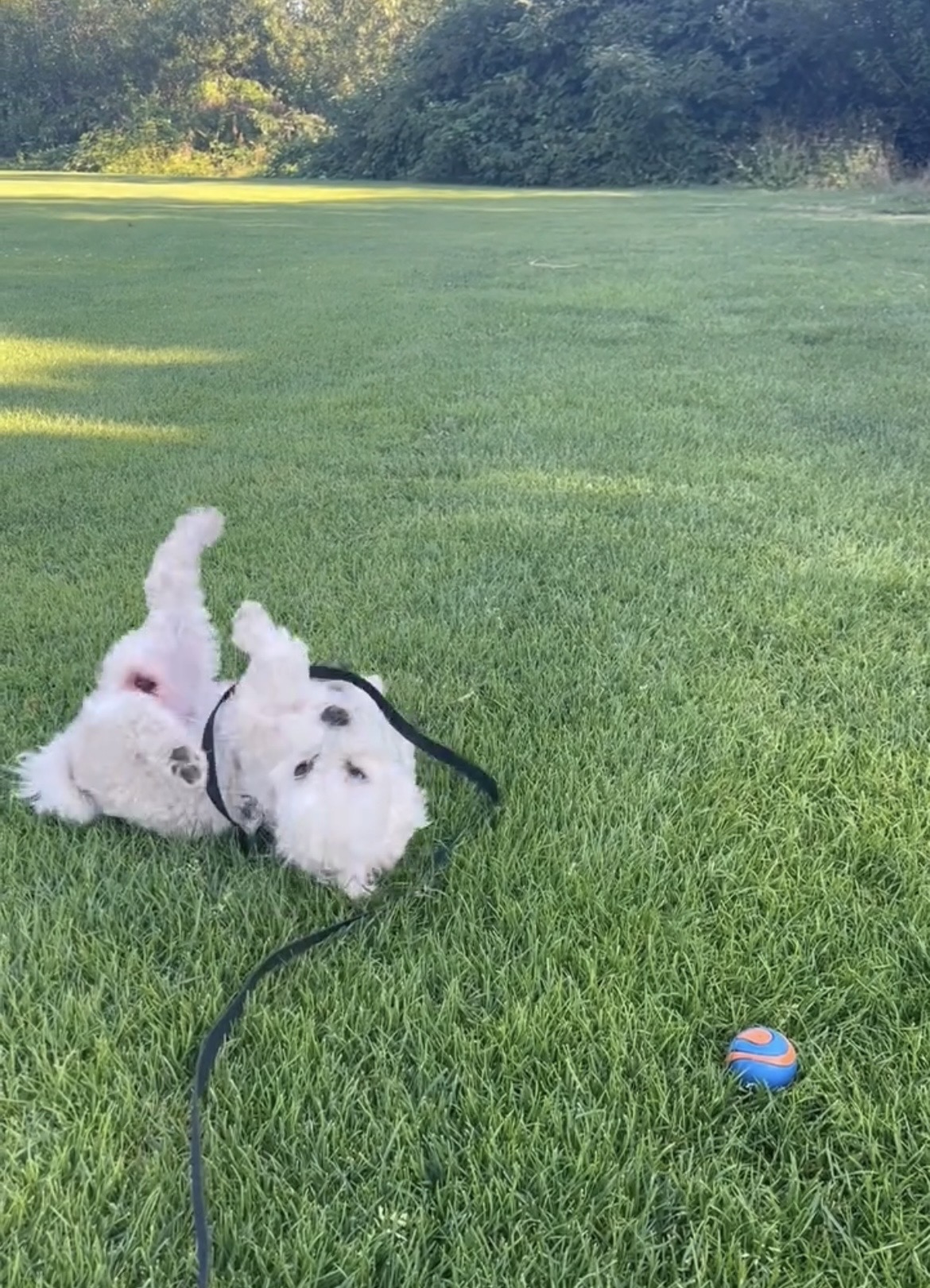 Tori enjoying the park — the reddish staining on her fur was still visible during this period.
 Lazy mode activated — but the tear stains and redness were a constant presence.
 Even in her calmest moments, the discoloration on her face and legs was hard to miss.
What the Log Started Showing
A few months in, I went back through the entries and compared them against the notes I'd been making about how Tori looked and felt.
The tear stains were fading. Then they were gone.
The redness around where she peed — gone.
The red patches on her legs where she used to lick — gone.
I hadn't noticed the change happening in real time because it was gradual. Day to day, you don't see it. But looking at the notes over months, the timeline was right there. The improvements tracked closely with when I had cleaned up her diet.
 After several months on the new diet — no more tear stains, no redness. Clean, white fur.
 A close-up says it all — the staining around her eyes is completely gone.
What I Think Actually Helped
Here's the thing about tear stains: there are a lot of supplements and foods marketed as treatments. But I don't think the answer was adding something. I think it was removing something — probably an ingredient or additive she was reacting to.
The broth topper likely helped too, but in a different way. It added real hydration to her meals. Before, her anal gland secretions were paste-like, which isn't ideal. After adding the broth regularly, they became runny — which is actually the normal, healthy state. That kind of internal change doesn't happen by accident.
And the treat cleanup was probably just as important as the food. When you reduce everything to single ingredients, it's a lot easier to spot what's causing a reaction and what isn't.
Why Logging — Even Loosely — Mattered
I'm not suggesting anyone track every meal. That's not realistic, and it's not what I did.
But jotting down diet changes and anything you notice — even occasionally — gives you a timeline. And the timeline tells a story you can't see just by living through it day to day.
Without those notes, I might have thought the improvement was seasonal. Or random. Or just Tori growing out of something. Having a record made the connection visible.
For Tori, that turned out to make a real difference. I just needed somewhere to track it.